


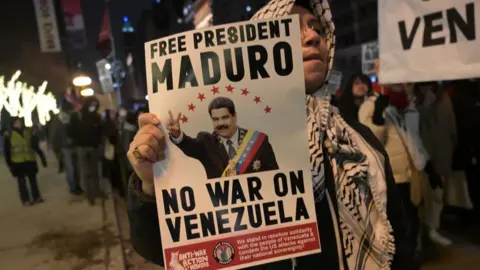
This past Monday, a shackled, jumpsuit-clad Nicholas Maduro disembarked from a military helicopter in Manhattan, accompanied by federal marshals.
The leader of Venezuela had been held overnight in a infamous federal jail in Brooklyn, before authorities moved him to a Manhattan federal building to face legal accusations.
The chief law enforcement officer has stated Maduro was taken to the US to "stand trial".
But jurisprudence authorities doubt the legality of the administration's actions, and contend the US may have infringed upon international statutes regulating the military intervention. Domestically, however, the US's actions enter a legal grey area that may still lead to Maduro being tried, regardless of the circumstances that delivered him.
The US insists its actions were legally justified. The executive branch has alleged Maduro of "drug-funded terrorism" and enabling the movement of "thousands of tonnes" of narcotics to the US.
"All personnel involved acted by the book, decisively, and in complete adherence to US law and official guidelines," the Attorney General said in a statement.
Maduro has long denied US claims that he oversees an illegal drug operation, and in court in New York on Monday he entered a plea of not guilty.
Global Law and Enforcement Concerns
While the indictments are related to drugs, the US pursuit of Maduro follows years of censure of his governance of Venezuela from the broader global community.
In 2020, UN investigators said Maduro's government had carried out "serious breaches" constituting human rights atrocities - and that the president and other senior figures were connected. The US and some of its allies have also accused Maduro of manipulating votes, and refused to acknowledge him as the rightful leader.
Maduro's alleged links to drugs cartels are the centerpiece of this legal case, yet the US tactics in putting him before a US judge to respond to these allegations are also under scrutiny.
Conducting a military operation in Venezuela and spiriting Maduro out of the country secretly was "a clear violation under global statutes," said a expert at a law school.
Experts highlighted a series of issues stemming from the US action.
The United Nations Charter bans members from the threat or use of force against other states. It permits "self-defence if an armed attack occurs" but that risk must be immediate, analysts said. The other allowance occurs when the UN Security Council approves such an operation, which the US lacked before it proceeded in Venezuela.
Treaty law would view the drug-trafficking offences the US alleges against Maduro to be a police concern, analysts argue, not a act of war that might permit one country to take armed action against another.
In public statements, the administration has described the mission as, in the words of the Secretary of State, "essentially a criminal apprehension", rather than an act of war.
Historical Parallels and Domestic Jurisdictional Questions
Maduro has been indicted on drug trafficking charges in the US since 2020; the federal prosecutors has now issued a revised - or amended - charging document against the Venezuelan leader. The executive branch argues it is now enforcing it.
"The action was executed to facilitate an ongoing criminal prosecution linked to massive narcotics trafficking and related offenses that have spurred conflict, destabilised the region, and been a direct cause of the narcotics problem causing fatalities in the US," the AG said in her remarks.
But since the mission, several jurists have said the US broke treaty obligations by extracting Maduro out of Venezuela on its own.
"One nation cannot invade another foreign country and apprehend citizens," said an authority in international criminal law. "If the US wants to arrest someone in another country, the proper way to do that is a legal process."
Regardless of whether an individual is accused in America, "The US has no authority to operate internationally executing an arrest warrant in the lands of other sovereign states," she said.
Maduro's attorneys in court on Monday said they would contest the lawfulness of the US mission which transported him from Caracas to New York.
There's also a ongoing legal debate about whether presidents must comply with the UN Charter. The US Constitution views treaties the country signs to be the "binding legal authority".
But there's a notable precedent of a former executive contending it did not have to comply with the charter.
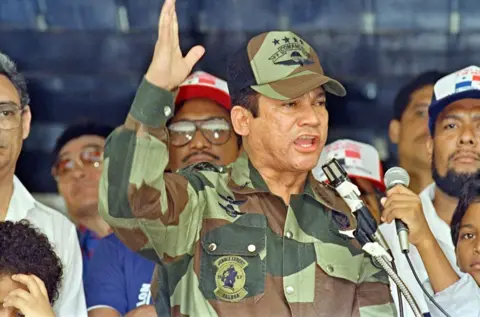
In 1989, the George HW Bush administration removed Panama's strongman Manuel Noriega and brought him to the US to answer illicit narcotics accusations.
An confidential Justice Department memo from the time stated that the president had the executive right to order the FBI to apprehend individuals who violated US law, "even if those actions violate traditional state practice" - including the UN Charter.
The draftsman of that opinion, William Barr, became the US attorney general and filed the initial 2020 accusation against Maduro.
However, the document's logic later came under criticism from academics. US the judiciary have not explicitly weighed in on the question.
Domestic War Powers and Jurisdiction
In the US, the question of whether this operation violated any domestic laws is multifaceted.
The US Constitution gives Congress the authority to commence hostilities, but places the president in charge of the armed forces.
A War Powers Resolution called the War Powers Resolution imposes limits on the president's power to use military force. It mandates the president to inform Congress before sending US troops into foreign nations "in every possible instance," and report to Congress within 48 hours of deploying forces.
The government withheld Congress a prior warning before the action in Venezuela "to ensure its success," a top official said.
However, several {presidents|commanders


